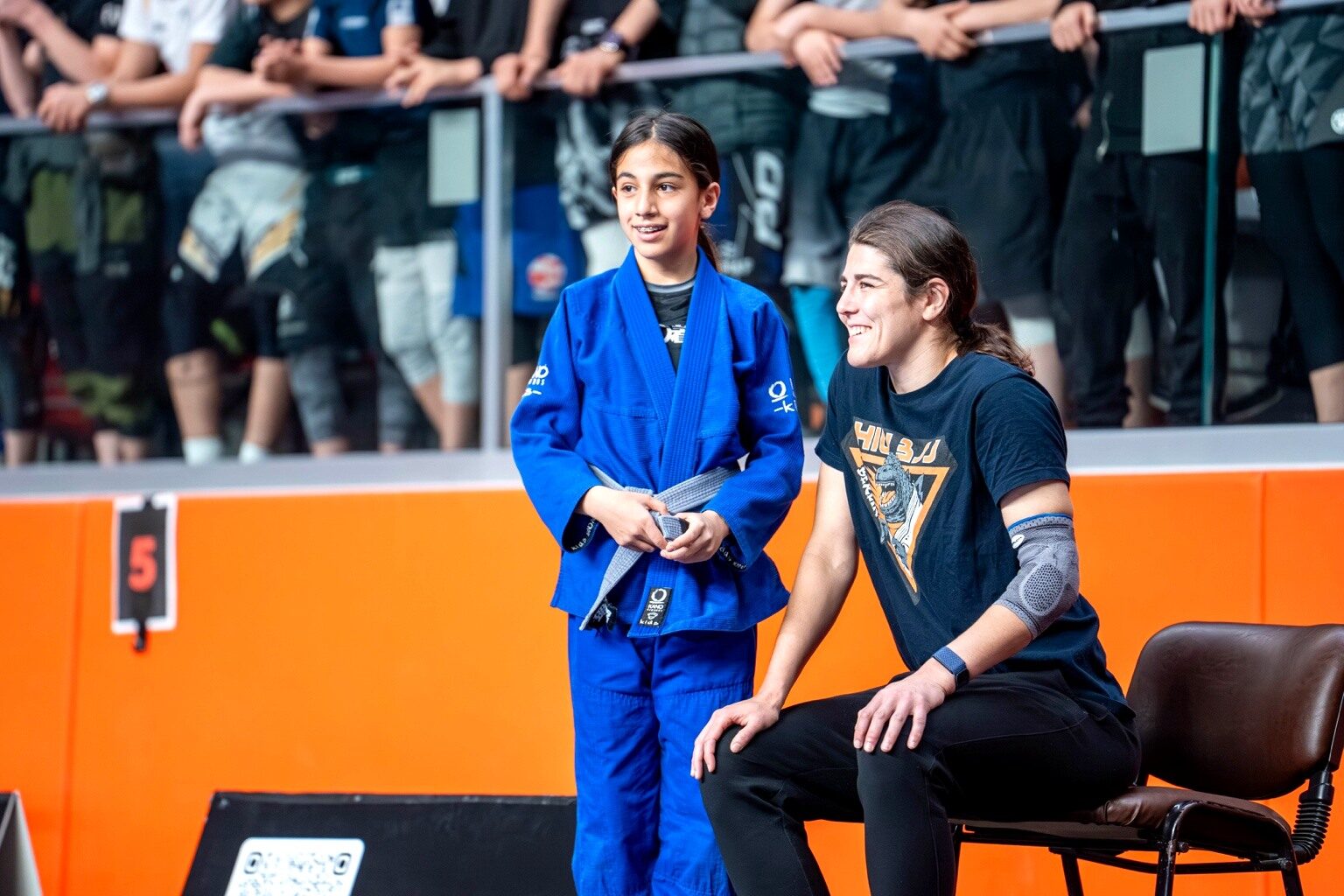
The focus is on movement, technique, clear rules, respectful cooperation and the experience that progress comes through patience, regular practice and persistence.
Many parents are looking for more than just physical exercise. They want an environment where children can develop confidence, take responsibility, focus on a task and learn how to deal with challenges. Brazilian Jiu-Jitsu combines these areas in a practical way: children move, solve technical problems with partners and experience directly that learning takes time.
What is Brazilian Jiu-Jitsu for kids?
Brazilian Jiu-Jitsu, or BJJ, is a grappling martial art. Children learn in an age-appropriate way how to move safely, fall, control positions, escape and work with a training partner.
Classes combine technical drills, movement games and small challenges. The younger the children, the more playful the structure. As they grow older, techniques, rules and training routines become more precise without losing the enjoyment of learning.
What benefits can BJJ offer children?
Children arrive with very different abilities. Some already move confidently, while others are still developing coordination and body awareness. Some feel comfortable in a group straight away; others need more time. Good kids’ coaching takes these differences seriously.
- Movement and coordination: rolling, balancing, changing direction and partner drills build versatile body awareness.
- Focus: techniques are taught step by step. Children learn to listen, observe and apply instructions.
- Confidence: progress comes through their own effort, showing children that they can master difficult tasks.
- Respect and responsibility: BJJ only works when partners look after each other, follow rules and use techniques with control.
- Problem-solving: every position presents a new challenge and encourages children to stay calm and look for a technical solution.
- Team spirit: even though training often happens with one partner and competition is individual, development takes place within a supportive team.
Children learn how to handle frustration
Not every technique works immediately. It may take several attempts to understand a movement, solve a position or complete a task. That is a normal part of Brazilian Jiu-Jitsu.
Children learn that making a mistake is not a reason to stop. They can try again, ask a question, look for another solution and give themselves time. In practice, they experience that patience, repetition and persistence lead to progress.
This lesson can be valuable beyond the mat: setbacks do not automatically mean failure; they are part of a learning process. Every child develops at their own pace.
“Children do not all have to learn at the same speed. What matters is that they enjoy training, feel safe and experience that patience and consistent practice pay off.”
At what age can my child start?
A four-year-old learns differently from a ten-year-old or a teenager. Motor skills, attention, strength, social development and understanding of rules change significantly with age. That is why it is important not to place every child in one large mixed group.
Hilti BJJ Berlin offers age-appropriate programmes:
- Parent-and-child mat adventure, approx. ages 2–5: moving, exploring and gaining first experiences on the mat together.
- Minis, approx. ages 5–8: playful introduction, basic movement, coordination, clear rules and learning together.
- Kids, approx. ages 9–12: more technical foundations, positional understanding, structured training and, where there is interest, focused competition preparation.
- Teens, approx. ages 13–16: increasingly intensive technical training, more personal responsibility and deeper competition preparation. Interested teenagers may also join international competition trips across Europe.
The right group is not determined by age alone. Experience, attention and individual development matter too. Our coaching team can help. Current class times are listed in the schedule, and the kids’ BJJ page gives an overview of all groups.
Is Brazilian Jiu-Jitsu safe for children?
As with any physical activity, the risk of injury can never be reduced to zero. What matters is age-appropriate teaching, clear rules, attentive coaches and a culture where control is more important than strength.
Techniques are introduced step by step. Children learn early to notice their partner’s signals, stop in time and avoid uncontrolled movement.
Hygiene is also part of safety: clean training clothes, flip-flops off the mat and trimmed fingernails and toenails are mandatory.
Why competition can be valuable for children
We believe competitions are a very valuable addition to regular training. They give children a concrete goal and create experiences that are difficult to reproduce in an ordinary class.
Children can learn how to prepare, manage nerves, make decisions under pressure, win respectfully and process a loss. They experience that a result does not define their value and that a difficult match can provide useful lessons for the next training session.
- prepare consistently for a goal
- show courage and compete despite feeling nervous
- put success into perspective and treat others fairly
- accept a loss, analyse it and continue training
- support teammates and travel together
- take responsibility for their own preparation
Hilti BJJ Berlin regularly travels together to regional, national and international tournaments. Focused competition preparation can already begin in the Kids groups whenever a child is interested. For Teens, this work becomes more intensive and can include international competition trips across Europe. In our experience, very few teams in Germany attend international youth tournaments as regularly and with such a broad group as we do. Coaches, teammates and families support the children on site and review the matches together afterwards. Competition remains voluntary: no child is pressured or forced to take part, and every child develops at their own pace. Read more about our Competition Team.
Brazilian Jiu-Jitsu is becoming more popular worldwide
There is no central worldwide membership database for BJJ. However, developments at major governing bodies clearly show that children’s and youth BJJ is gaining international importance. The International Brazilian Jiu-Jitsu Federation (IBJJF) introduced dedicated kids’ rankings and now runs many standalone kids’ events across North and South America, Europe and Asia.
Official sources: IBJJF on the launch of kids’ rankings and the IBJJF results archive with international kids’ events.
What happens in a trial class?
Your child does not need any prior experience. After booking online, choose a suitable Kids or Teens class. The coaching team explains the class and guides your child through the session.
Please bring:
- a clean T-shirt or rashguard
- shorts or leggings without zips
- flip-flops for walking off the mat
- a water bottle
- trimmed fingernails and toenails
A loan gi is available for a gi class if needed. Parents remain outside the mat area so children and coaches can work without distraction.
Discover BJJ for your child
Choose a suitable kids’ or teens’ class and experience our training without obligation.
- Age-appropriate groups
- Experienced kids’ coaching team
- Training in Berlin Wedding
Children need movement, clear structure and time for their own development.
BJJ combines technical challenges with teamwork, responsibility and many small learning processes. Competitions can create valuable experiences but remain voluntary. No child is pressured, and every child develops at their own pace.
Frequently asked questions about BJJ for kids
At what age can my child start BJJ?
Hilti BJJ Berlin offers age-appropriate classes starting with parent-and-child mat adventures for children aged two to five. These are followed by Minis, Kids and Teens groups. The key is finding a group that matches the child’s stage of development.
Does my child need to be athletic or flexible?
No. Children start with very different abilities. Strength, mobility, coordination and endurance develop step by step through regular training.
Does my child have to compete?
No. Competitions are voluntary. We believe they can be a valuable learning experience and support interested children carefully, but no child is pressured or forced to compete.
What does my child need for a trial class?
Clean sportswear, a T-shirt or rashguard, shorts or leggings without zips, flip-flops for walking off the mat, and trimmed fingernails and toenails. A gi can be borrowed if needed.
How often should my child train?
We generally recommend at least two training sessions per week so movements and routines can become more familiar. Children who enjoy training and want to do more are welcome to attend additional sessions. The right amount depends on age, daily routine and individual motivation.
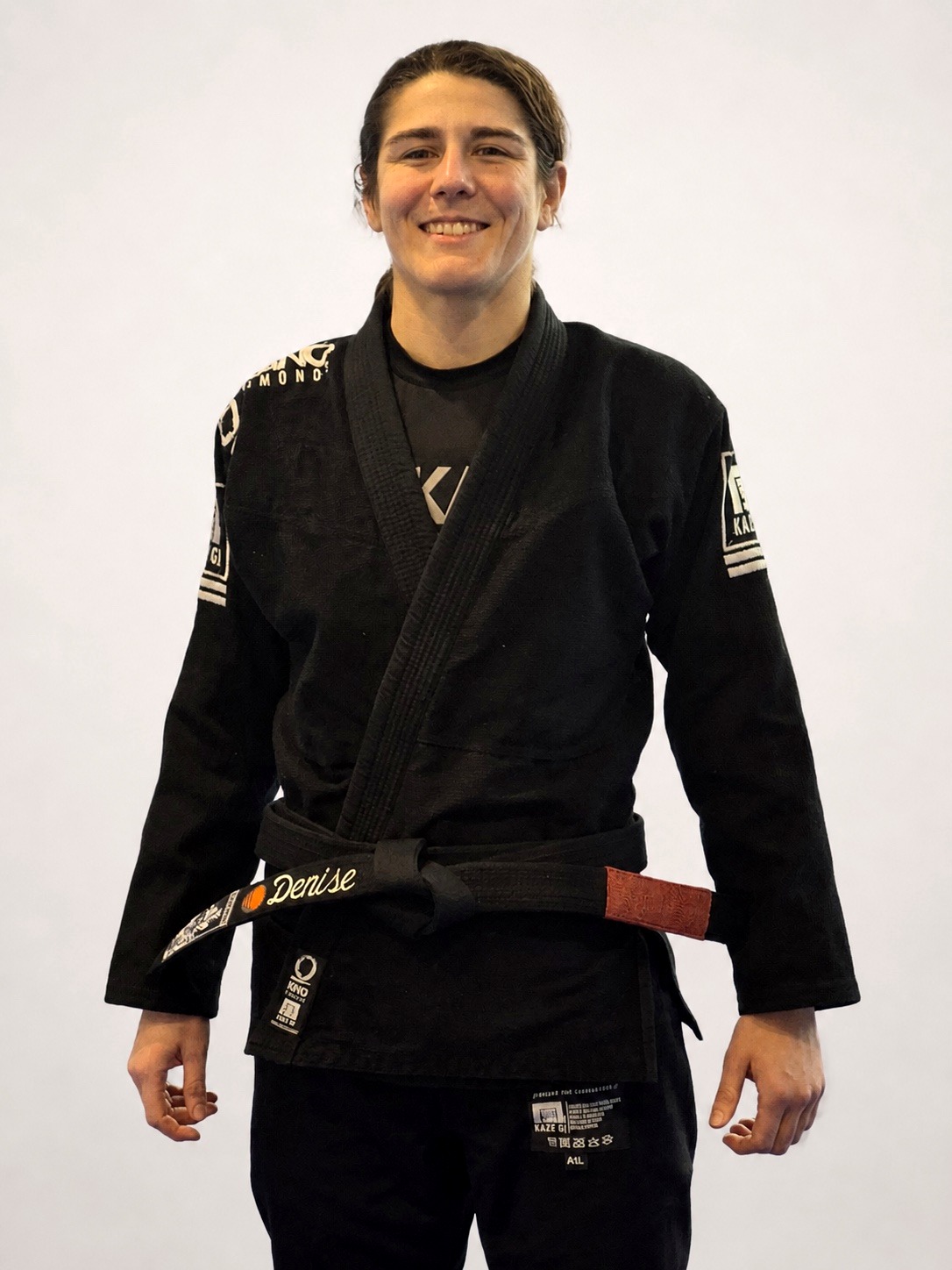
Denise Krahn
Denise is a Brazilian Jiu-Jitsu black belt and leads the kids’ and teens’ programme at Hilti BJJ Berlin. She supports young athletes from their first class through to national and international competition.
View coach profile →